Home » Client Stories » Markus and Martha
Markus & Martha – Two engineers and their path to australia
Visapath client story · Germany/Mexico → Sydney
Deciding on Australia
For Martha and Markus, it all started with an idea that didn’t feel particularly realistic at first: building a life together in Australia.
They had met during their Master in Engineering Management at the University of Newcastle in Australia. Those study years left a mark: classes, road trips, living close to the ocean and experiencing a work–life balance that felt very different from Germany or Mexico.
Martha remembers:
“We said back then: we want to settle at a secure place where we can both be comfortable and happy.”
Germany felt too tightly structured and work-focused for her; Mexico did not seem like a long-term option for Markus because of safety. Australia became the middle ground: sunny, open, relatively safe – and with a daily rhythm that suited them both.
The idea grew into a plan: they would try to build a future in Australia. Not with naïve optimism, but with the mindset: better to try it out than regret it forever.

at a glance
Timeline
2021 → 2023
Location
Sydney, NSW
Status
Permanent Residents (Skilled Visa)
A visa process with many stages
In 2021 they began the long journey through the Australian visa system – from the start supported by Visapath.
Markus recalls how he first found them: “I was simply on Google, checking visa requirements and ‘Australia visa applications’. That’s how I came across your website.”
After the first consultation it was clear: they wanted to do this properly and get professional support on their way through.
The first step was a Skills Assessment of Markus’ engineering qualifications with Engineers Australia.
He says today: “I never thought it would be that painful. The level of detail, all the documents, reports, work references – it really blew my mind. Without help, we would’ve struggled a lot getting it right.”
In April 2022 the positive Skills Assessment finally came through. Right after that, they lodged their Expressions of Interest (EOI) for a Skilled Independent visa (Subclass 189) as well as for visas with state nomination.
Instead of staying in Germany and simply waiting, they decided to take a sabbatical. Markus resigned from his job, they sold many of their things and went travelling – without knowing whether they would ever receive an invitation for the Australian visa.
Martha remembers: “There were days when I thought: this is going nowhere. And then there were days when we just kept going anyway.”
Plan B: a PhD in Sydney
Parallel to the EOI, Markus started working on a Plan B: he researched PhD opportunities in Australia. “For us, this was an alternative to relocate to Australia on a Student visa within a shorter period.”
At first, he contacted people at the university where they had studied before, but in the middle of COVID lockdowns, not much was possible.
While they were travelling through the US, he came across a PhD position at the University of Sydney, closely related to his previous work in steel and surface engineering and applied.
“I actually had the interview in a hotel in Las Vegas,” he says with a smile.
A couple of weeks later, the offer was on the table – and with it a realistic way into Australia: even if nothing happened with the EOI, they could both go on a Student visa (Subclass 500) and Markus could start his PhD.
The student visa was prepared and lodged in parallel with Visapath.
Invitation in Peru, student visa and PR
In October 2022 the key message finally arrived: the invitation to apply for the Skilled Independent visa (Subclass 189).
Markus and Martha were travelling to Machu Pichu in Peru when the email popped up on Markus phone.
“We saw the email and just couldn’t believe it,” Martha says. “I called my parents straight away. It’s one of those moments you never forget.”
They still decided to enter Australia first on the student visa. That way, they could move as planned– and the permanent visa application could run in the background.
In March 2023 they arrived in Sydney. The 189-application continued to be processed while they were already settling into their new life.
The Subclass 189 grant – and with it permanent residency – came through in November 2023, when they had already been in Australia for several months.
For both of them, that meant above all: security and predictability – no more hopping from one temporary visa to the next, but the option to stay long term and later apply for Australian citizenship. “We were also able to cancel the expensive Overseas Student Health Insurance, as we were eligible for the Australian health care Medicare. That helped us a lot financially” remembers Markus.
Arriving in Sydney: PhD and job hunting
Markus started his PhD at the University of Sydney immediately after arriving. Shortly afterwards, he took up a casual position with a surface engineering company, working one or two days a week in research and development alongside his PhD.
He also got involved with the State Emergency Service (SES), the Australian volunteer emergency and disaster response organisation.
“I used to volunteer with the Red Cross in Germany and wanted something similar here. SES gives me a sense of community again,” he says.
For Martha, the start on the job market was tougher. She applied for a wide range of positions and initially heard little back. Through the landlord’s son she got her first job with a mortgage broker. Shortly afterwards, she moved into fresh-produce wholesale, supplying major supermarket chains.
“I really enjoy it,” she says. “It’s a mix of organisation, logistics and dealing with customers – and that suits me.”
The move also came with social challenges.
“Socially, it was the hardest part,” Markus says. “In Germany I had friends from school and university, people I saw every weekend. You don’t rebuild that in one or two years.”
For Martha, the greatest emotional weight came from distance to family:
“We talk a lot on the phone, but it’s not the same as just dropping by for dinner.”
Everyday life between work and the ocean
By now, life between campus, work and free time has found its rhythm.
Whenever they can, they head outdoors. They spend time along the coast, go for bushwalks, paddle kayaks, have barbeques in the parks or simply sit and watch the sunset. One weekend, they watched a whale calf with its mother breaching off the coast for several minutes – a memory that has stayed with them.
Moments like these are, for both of them, the essence of what makes Australia special: nature as part of everyday life, not just a holiday backdrop.
Small helpers: the Sydney webcam
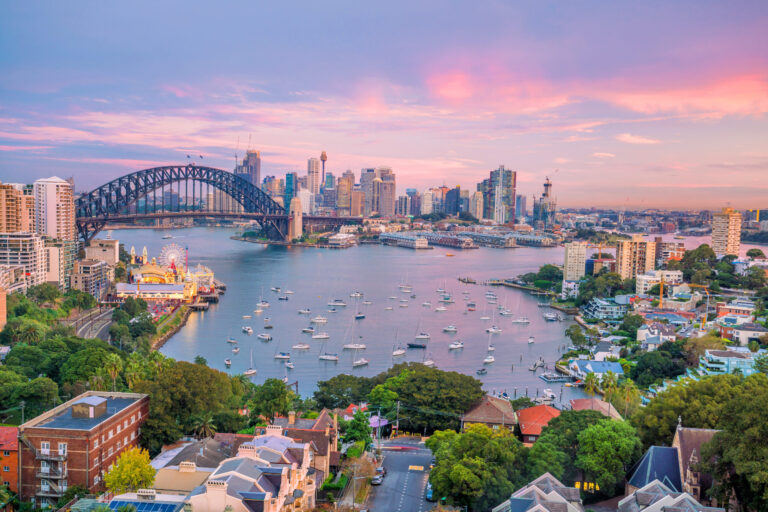
Even before their move, Markus looked for ways to stay motivated through the long process.
At his office in Germany, he often had a live webcam of Sydney open on one of his screens – harbour, skyline, real-time weather.
“For me it was more than a background image,” he recalls. “I had that webcam open every day. It reminded me on our goal to go back to Australia, not just a plan on paper. It helped me keep going.”
Australian clichés – and the reality
When asked about the classic Australian clichés – poisonous snakes, spiders and “the most dangerous animals in the world” – Markus and Martha are relaxed.
“Snakes and spiders? A lot of Australians talk more about swooping magpies,” Markus says with a grin.
These magpies dive at cyclists and pedestrians during breeding season – and for many locals they are the animals to be genuinely wary of, far more present in daily life than any snake.
Looking ahead
In the medium term, Markus and Martha can imagine swapping Sydney for a quieter, more rural region. Western Australia, with its nature and engineering job opportunities, is one option they are actively considering.
Markus wants to move back to industry after finishing his PhD. Martha is thinking about returning to a more engineering or project management position.
“We’ve learnt that nothing is guaranteed,” Markus says. “But we’ve also seen how much is possible if you just keep going step by step.”
Both emphasise that nothing is set in stone and plans can change. But for now, Australia is where they want to be – and where they intend to stay. Applying for Australian citizenship is the next logical step.
Martha laughs:
“We’re already looking forward to the ceremony – with all the koalas and everything that comes with it.”
What remains is the feeling that they made a bold, but ultimately very right, decision. Their move to Australia was never an “all or nothing” gamble – it was a joint attempt that felt right then, and still feels right today.
Interview with Markus & Martha
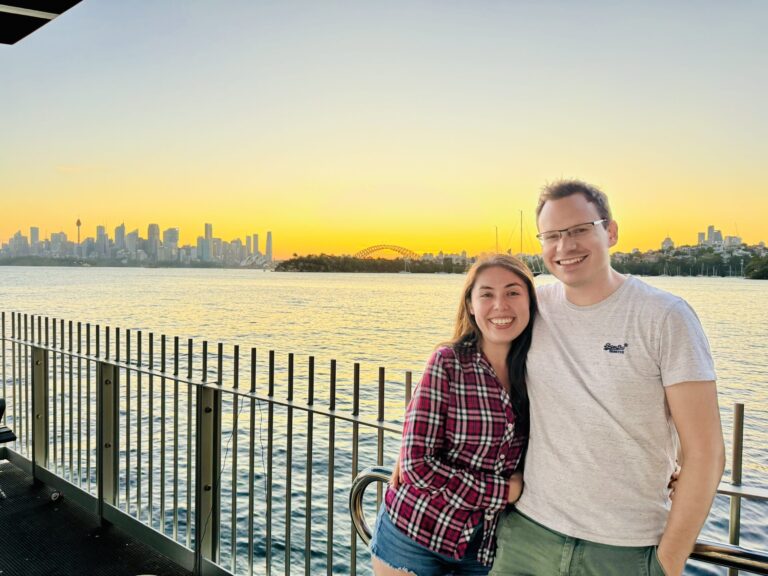
What advice would you give to people who are thinking about migrating to Australia?
Markus: “First of all: stay realistic. There’s no such thing as ‘everything will automatically be perfect’. It takes time, money and a lot of mental resilience. What helped us was breaking the process down into small steps and not always looking at the big picture. And we would definitely recommend getting professional help. The visa system is complex and sometimes confusing. For us, it was extremely reassuring to know that someone is looking over everything who actually understands the rules – and that we didn’t have to figure it out all on our own.”
And how did you experience working with Visapath?
Markus: “For us it made a huge difference not just to work with an anonymous checklist, but with people we actually knew and could talk to. We never felt like just another ‘case’ in some system. It was always personal and human – we could ask questions, raise doubts, and you really thought along with us instead of simply ‘processing a service’. Especially with the Skills Assessment and the combination of PhD, student visa and PR, your structure, your judgement and the honest, human feedback were incredibly helpful.”
What does permanent residency mean to you personally – beyond the legal side?
Markus: “For us it stands for freedom and recognition. It’s not just a stamp in the passport, it’s a sign that we’re allowed to stay and that we belong here to some extent. We don’t have to think every few years about which visa comes next, we can actually plan. And it gives us the feeling that all the effort, the waiting, the uncertainty was worth it. We’re proud that we achieved this.”
How does working life in Australia differ from your experience in Germany and Mexico?
Martha: “In Australia, the work environment is much more relaxed than what we knew from Germany and Mexico. You can just walk into your manager’s office without feeling a big hierarchy. If you’re sick or you arrive late because something happened, people don’t immediately say, ‘That’s not okay’. In Mexico, my mum would probably say: ‘Be careful, they’re going to fire you.’ Here it’s pretty normal, as long as you do your job.”
Markus: “On the other hand, there’s less annual leave and less formal job security than in Germany. It’s more relaxed – but also a bit less cushioned.”
Does Australia feel like home now?
Martha: “For me it feels more and more like home. I can really imagine raising children here and living here long term. If my family could visit more often, it would be close to perfect.”
Markus: “For me it’s still something between tourist and local. You belong here in some ways, but a part of you always stays German. Maybe that’s okay – in the end this is what defines us.”
What do you love most about your everyday life in Australia – especially compared to Germany and Mexico?
Markus: “When I go back to Germany, I always get a kind of reverse culture shock. Everyone seems stressed, hectic and nobody really smiles. Here we enjoy the opposite: good weather, lots of barbecue spots, being outside, going kayaking, having a picnic, watching the sunset. In Mexico many of those things are not possible because of safety, and in Germany the weather limits you. That freedom to be outside is the biggest difference for me – and one of the reasons why it still feels like a good decision.”
Martha: “For me it feels like a privilege to live so close to the ocean. You can go to the beach almost any day and at the same time have a normal job – usually you only know places like that from holidays. We really love that. What I don’t love as much is the traffic in Sydney. For some short distances you need an eternity, and that can be frustrating.”

Markus and Martha's VISA PATHWAY


Schritt 1

Student Visa
(subclass 500)



Schritt 3

Skilled Independent Visa
(subclass 189)

Ready to begin your own chapter?
From your first questions through to the final visa grant — we support you at every step of your journey to Australia.