
Home » Visa categories » Australia » Working-Holiday-Visa » Second Working Holiday visa
Working Holiday Visa
A second or third Work & Travel Visa for Australia.

Overview
An Australian Working Holiday Visa can generally only be granted once in a lifetime and allows a stay of up to 12 months.
Since 2005, however, it has been possible—under certain conditions—to apply for a second Working Holiday Visa, allowing you to extend your stay by another year or to return to Australia at a later time (as long as you still meet the age requirement).
In 2019, the rules were expanded further: Anyone who again meets the eligibility criteria can even apply for a third Working Holiday Visa.
To qualify, you must have completed a required period of work in designated regional areas of Australia during your first or second visa:
- at least 3 months of specified work for the second visa,
- at least 6 months of specified work for the third visa.
The work must fall under the official category of “specified work”, typically in industries such as agriculture, fishing, forestry, mining, or construction. Your employment must be paid and must be evidenced through acceptable documentation such as payslips or other valid income records.

Eligibility for the second Working Holiday Visa
To apply for a second Working Holiday Visa, the following requirements must be met:
- First Working Holiday Visa (Subclass 417 or 462):
You must currently hold a valid first Working Holiday Visa or must have held one in the past. - At least 3 months (88 days) of “specified work”:
During your first Working Holiday Visa, you must have completed a minimum of 3 months (88 calendar days) of “specified work” in an eligible role in a designated regional area. - Age requirement:
You must be between 18 and 30 years old at the time of application. Some nationalities (e.g., France, Canada, Ireland, Denmark, Italy, United Kingdom) are eligible for an extended age limit of up to 35 years.
Eligibility for the third Working Holiday Visa
To apply for a third Working Holiday Visa, the following requirements must be met:
- Second Working Holiday Visa (Subclass 417 or 462):
You must currently hold a valid second Working Holiday Visa or must have held one in the past. - At least 6 months (179 days) of “specified work”:
During your second Working Holiday Visa, you must have completed a minimum of 6 months (179 calendar days) of “specified work” in an eligible role in a designated regional area. - Age requirement:
You must be between 18 and 30 years old at the time of application. For some nationalities (e.g., France, Canada, Ireland, Denmark, Italy, United Kingdom), the extended age limit of up to 35 years applies.
Special Rule: British Citizens
Holders of a British passport can apply for both the second and third Working Holiday Visa without providing evidence of specified work. This special arrangement applies exclusively to British citizens.
Specified Work
“Specified work” refers to certain types of employment that must be carried out in designated industries and regional areas of Australia in order to qualify for a second or third Working Holiday Visa. These roles are intended to support industries that rely heavily on labour in rural or remote regions — for example, in agriculture, fishing, forestry, construction or tourism.
The exact requirements vary depending on your visa category:
- Subclass 417 and Subclass 462 each have their own lists of eligible specified-work industries and regions.
- Which work counts also depends on the visa you hold.
- The official lists are regularly updated by the Department of Home Affairs and should be reviewed carefully before starting any employment.
Eligible “Specified Work” Activities (subclass 417)
- Tourism and hospitality in Northern or Remote and Very Remote Australia (since 22 June 2021) — work in tourism and hospitality in northern or remote regions.
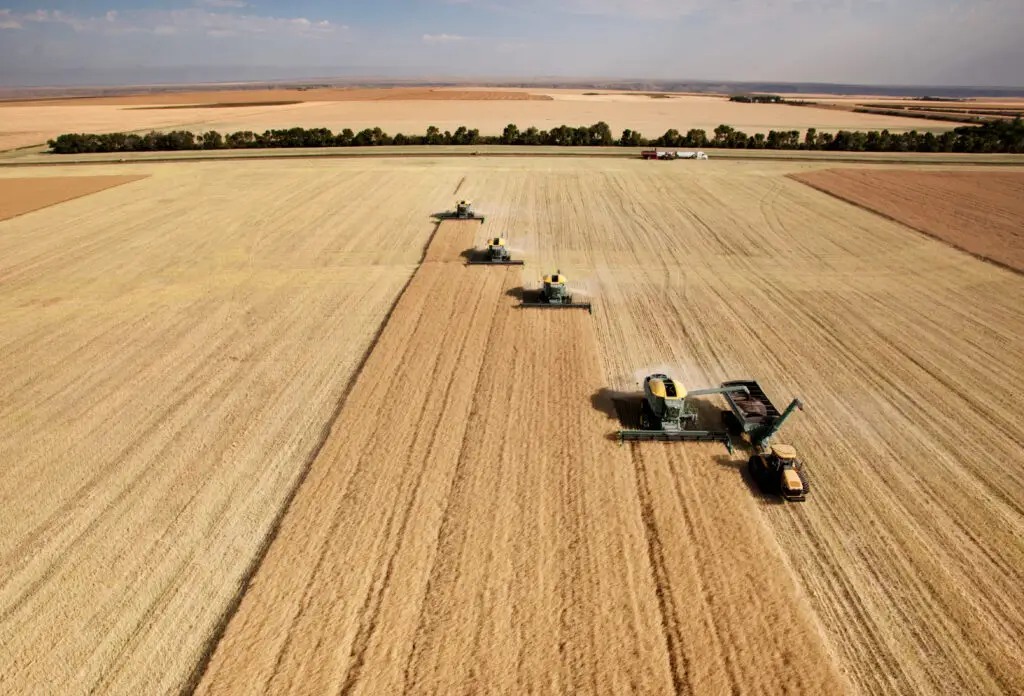
- Plant and animal cultivation in regional Australia — work in plant and animal production (e.g., harvesting, packing, pruning, caring for livestock).
- Fishing and pearling in regional Australia.
- Tree farming and felling in regional Australia — forestry, planting and felling trees.
- Mining in regional Australia.
- Construction in regional Australia.
- Bushfire recovery work in declared bushfire-affected areas (after 31 July 2019) — recovery and support work in officially declared areas.
- Recovery work in flood, cyclone or other severe weather-affected areas (after 31 December 2021).
- Critical COVID-19 work in the healthcare and medical sectors anywhere in Australia (after 31 January 2020) — work in health and aged care related to COVID-19, regardless of location.
The definitions of Northern or Remote, Very Remote Australia, regional Australia, and declared bushfire-affected areas are based on postcode lists. These are published by the Department of Home Affairs and should always be checked before commencing employment.
Eligible “Specified Work” Activities (subclass 462)
- Tourism and hospitality in Northern or Remote and Very Remote Australia (since 22 June 2021) — work in tourism and hospitality in northern or remote regions.
- Plant and animal cultivation in Northern Australia and in other specified areas of regional Australia — work in plant and animal production (e.g., harvesting, pruning, caring for livestock, packing).
- Fishing and pearling in Northern Australia only — work in fishing and pearling (exclusively in northern Australia).
- Tree farming and felling in Northern Australia only — forestry, planting and felling trees (exclusively in northern Australia).
- Construction in Northern Australia and in other specified areas of regional Australia — construction and trade-related work in northern Australia and other approved regional locations.
- Bushfire recovery work in declared bushfire-affected areas (after 31 July 2019) — recovery and support activities in officially declared areas.
- Recovery work in flood, cyclone or other severe weather-affected areas (after 31 December 2021) — reconstruction and recovery tasks following flooding, cyclones or other severe weather events.
- Critical COVID-19 work in the healthcare and medical sectors anywhere in Australia (after 31 January 2020) — work in the health and medical sectors related to COVID-19, regardless of location.
The definitions of Northern or Remote, Very Remote Australia, other specified areas of regional Australia, and declared bushfire-affected areas are based on postcode categories. These are published on the Department of Home Affairs website and should always be checked before commencing employment.
How Specified Work Days Are Counted
- Minimum Period
The following rules apply to both visa types — Working Holiday (subclass 417) and Work and Holiday (subclass 462):
- Calendar days include weekends and rest days within the employment period.
- Work can be continuous or completed with different employers. The main requirement is that you reach the required number of days.
- You cannot meet the 3- or 6-month requirement in a shorter time by working longer hours each day.
- What Counts as Full-Time Work
- The standard working day or shift in your industry/occupation is what counts — this determines whether a day qualifies.
- Shift work or piecework is acceptable as long as it meets the usual full-time workload for that industry.
- A single day can only be counted once, even if you worked long hours.
- Public holidays or sick days can be counted if they are paid.
- Unpaid time off — for example, due to poor weather — does not count, and this time must be made up.
- Part-Time, Seasonal and Combined Employment
- You must complete the equivalent number of working days or shifts that a full-time employee in the same industry would complete over 3 or 6 months.
- This requirement can be met through various forms of employment, for example:
- 5 days per week over 3 or 6 months,
- fewer days per week over a longer period,
- several shorter periods with different employers.
- Full-time and part-time periods may be combined to meet the overall requirement.
- Timing of the Work
- For the second Working Holiday visa, the specified work must be completed in full while holding your first Working Holiday visa.
- For the third visa, the work must be completed in full while holding your second visa and must have been completed after 1 July 2019.

Let's stay in touch!
Would you like to receive regular updates about living and working in Australia and New Zealand? Simply subscribe to our newsletter.
Subscribe to our regular updates. You can unsubscribe at any time.