
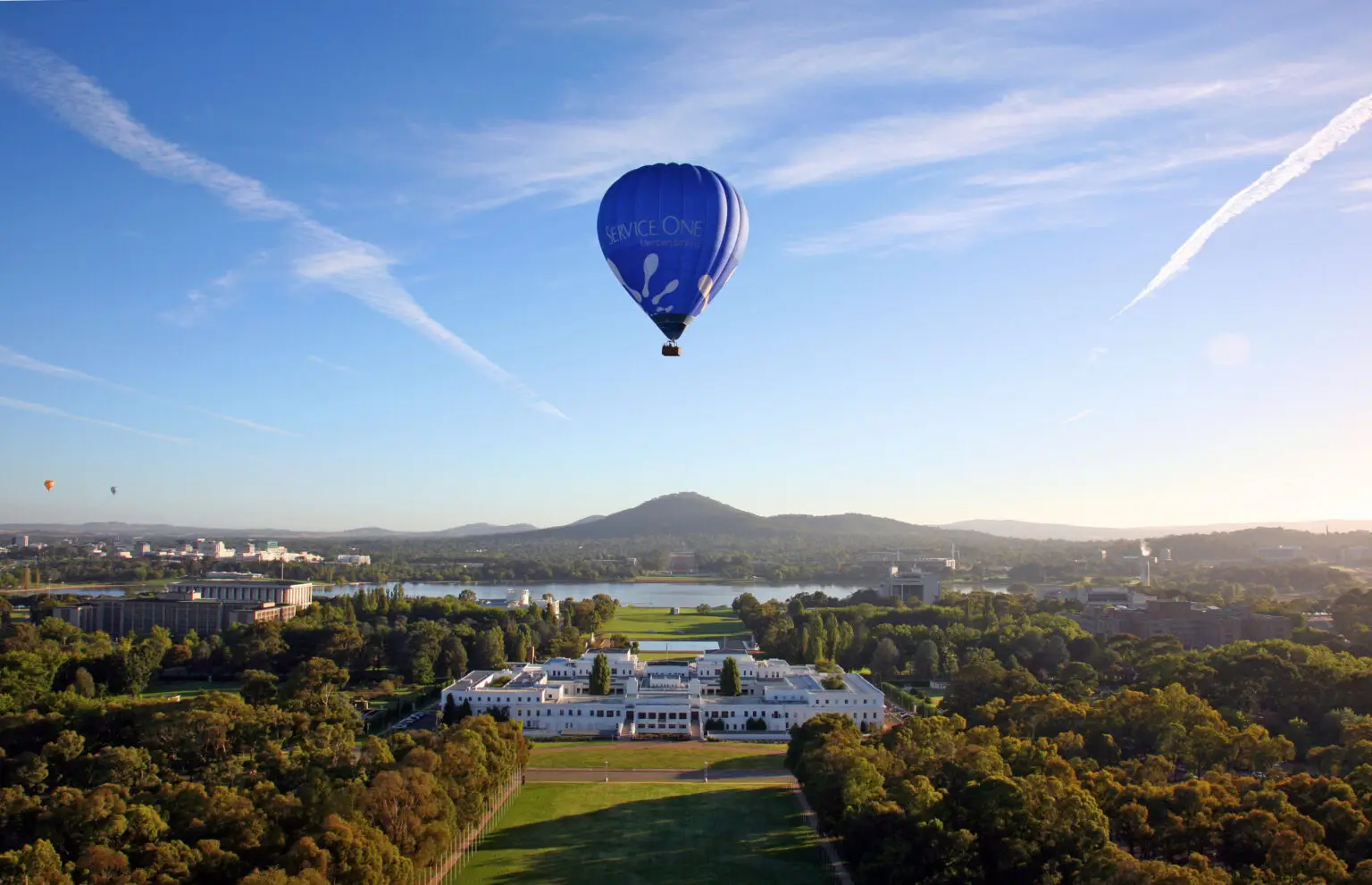
Australia is a comparatively young nation, and its capital, Canberra, was established and purpose-built in the early 20th century. Sitting roughly halfway between Sydney and Melbourne, the area that is now Australia’s capital was largely agricultural land about a century ago. Today, Canberra and the Australian Capital Territory (ACT) are Australia’s political and diplomatic centre, as well as an important cultural, artistic and historical hub.
The ACT At a Glance
The ACT is home to Australia’s national capital, Canberra, and was established as the nation’s administrative centre.
Population
The ACT is a territory, not a state. As the political and administrative centre of Australia, many of its more than 400,000 residents work in government and public administration. Almost the entire population lives in Canberra, which is also due to the ACT being the smallest territory, with boundaries largely defined by the city itself. The ACT has the highest population density of any Australian state or territory.
Main Regions
The following areas are among the most popular and best known parts of the ACT.
Canberra
Because agreement could not be reached on whether Sydney or Melbourne should become Australia’s capital, a compromise location was chosen roughly between the two. Canberra is one of Australia’s best-planned cities, and at the time of its design and construction it was considered one of the most progressive cities in the world. Following an international design competition, the American architect Walter Burley Griffin won the commission, and the city took shape from his design.
Jervis Bay
Geographically, the Jervis Bay Territory lies within New South Wales. However, it is an internal territory of the Commonwealth of Australia and is administered as part of the ACT. The bay covers around 100 square kilometres and includes a small coastal village on the NSW South Coast, providing Australia’s inland capital with direct access to the sea. The Royal Australian Naval College is based here. Much of the Jervis Bay Territory is made up of a national park, covering around three quarters of the area, with white-sand beaches and bushwalking tracks.
Namidgi National Park
Namadgi National Park lies south of Canberra and covers almost half of the ACT by area. Close to the capital you’ll find extensive, largely untouched natural landscapes. The park is home to more than 700 plant species and over 200 animal species, including a number that are rare or threatened. It also contains culturally significant sites that reflect a long history for both First Nations peoples and European settlers—making Namadgi an ideal base for exploring the region and camping.

Climate
The ACT experiences warm to hot summers and cooler winters. Year-round rainfall helps keep the region green and vibrant. Canberra is around a two-hour drive from the Snowy Mountains—one of the few places in Australia where you can get reliable winter snow.
Lifestyle
While Canberra and the ACT are sometimes seen as a quieter travel destination, the region is particularly attractive for people looking to live in Australia, thanks to its quality of life and lifestyle. The mix of local and international residents—drawn in part by Canberra’s role as the seat of government—contributes to a diverse and well-rounded community.
Sports
Sport is an important part of life in Canberra. The city has its own National Rugby League team and also fields teams in other popular sports such as cricket, Australian rules football and rugby union. Canberra is also home to the Australian Institute of Sport, where many of Australia’s future Olympians train.
Cuisine
Canberra is surrounded by green hills and agricultural regions, meaning high-quality local produce is readily available. With its diverse population and visitor base, Canberra and the ACT offer a broad food scene—from classic pub favourites to restaurants influenced by both Asian and European cuisines, as well as a strong café culture.
Beverages
The ACT is also home to over one hundred wineries and many small breweries. Within around 30 minutes’ drive, you can reach vineyards in the ACT wine region and taste local wines and craft beers.
Cost of Living
High wage levels associated with the capital and relatively competitive housing costs support a high standard of living in Canberra.
At the time of writing, the average house price in Canberra is around A$880,000 (approx. €560,000), while apartments average around A$500,000 (approx. €320,000).
Flora and Fauna
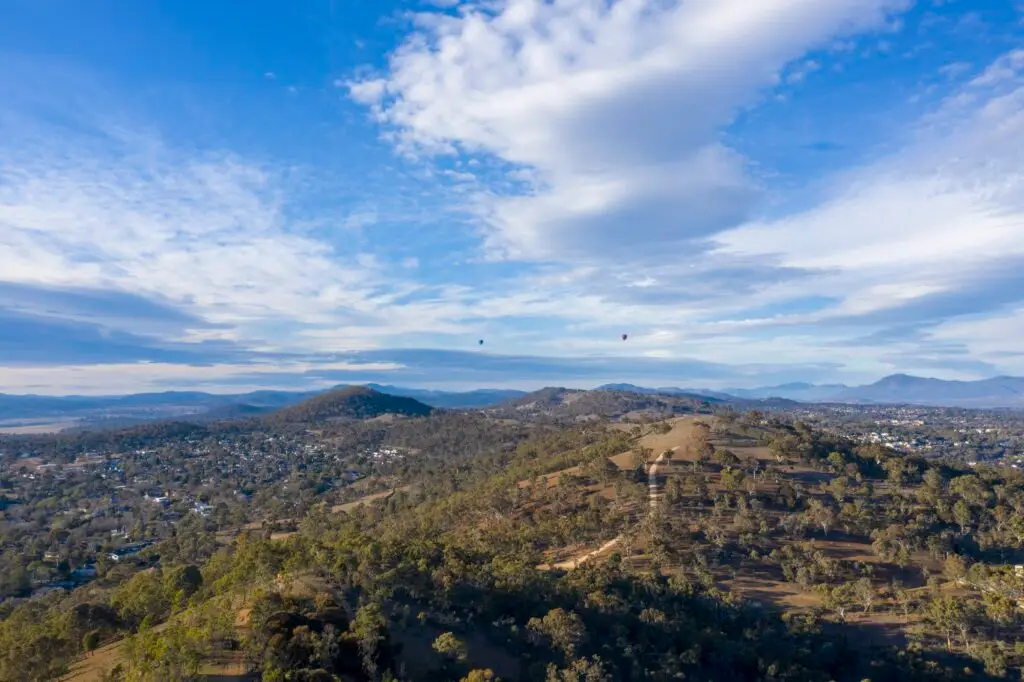
Surrounded by rivers and rolling ranges, the ACT is known for its scenic landscapes. Although the ACT is much smaller than other states and territories, its national parks still offer a remarkable diversity of plant and animal life.

Main Places of Interest
The ACT has many places to visit—many of them historically significant and linked to Australia’s national story.
National Museum of Australia
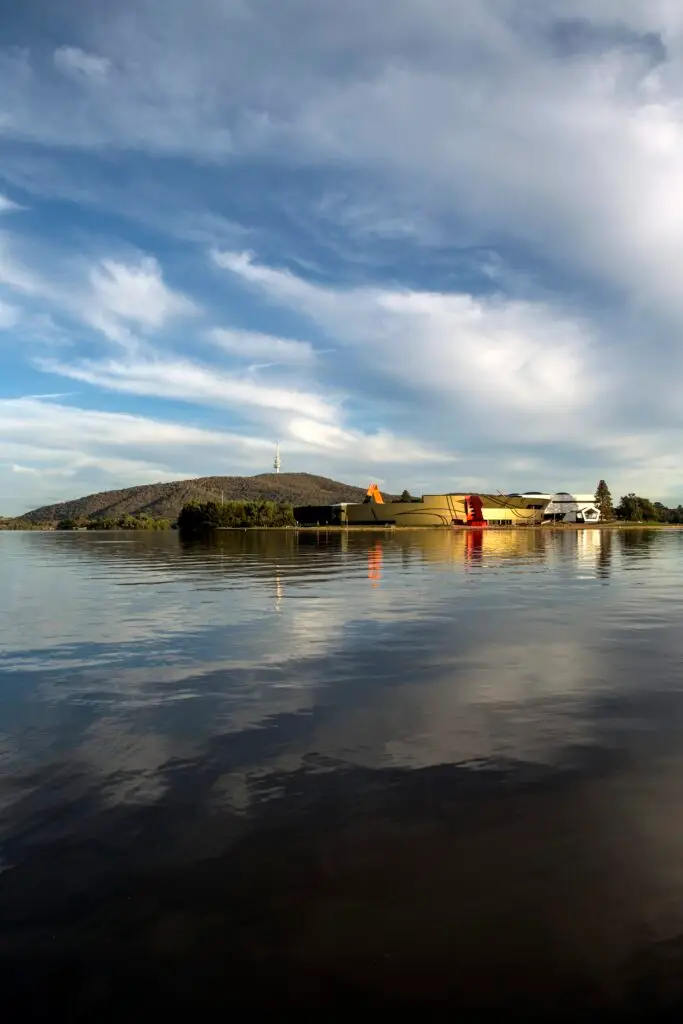
The National Museum of Australia features engaging exhibitions on Australian history and culture, as well as regular temporary exhibitions. It is an excellent place to explore Australia’s diverse history and identity in more depth.
Australian War Memorial
Australia has been involved in many major conflicts since World War I through to more recent engagements. The Australian War Memorial commemorates Australians who have served, and those who lost their lives, and tells the stories behind that history.
Questacon
Questacon, the National Science and Technology Centre, aims to foster understanding of scientific and technological progress. It does so in an interactive and entertaining way, with hands-on exhibits designed to help visitors explore how the world works.
Parliament House
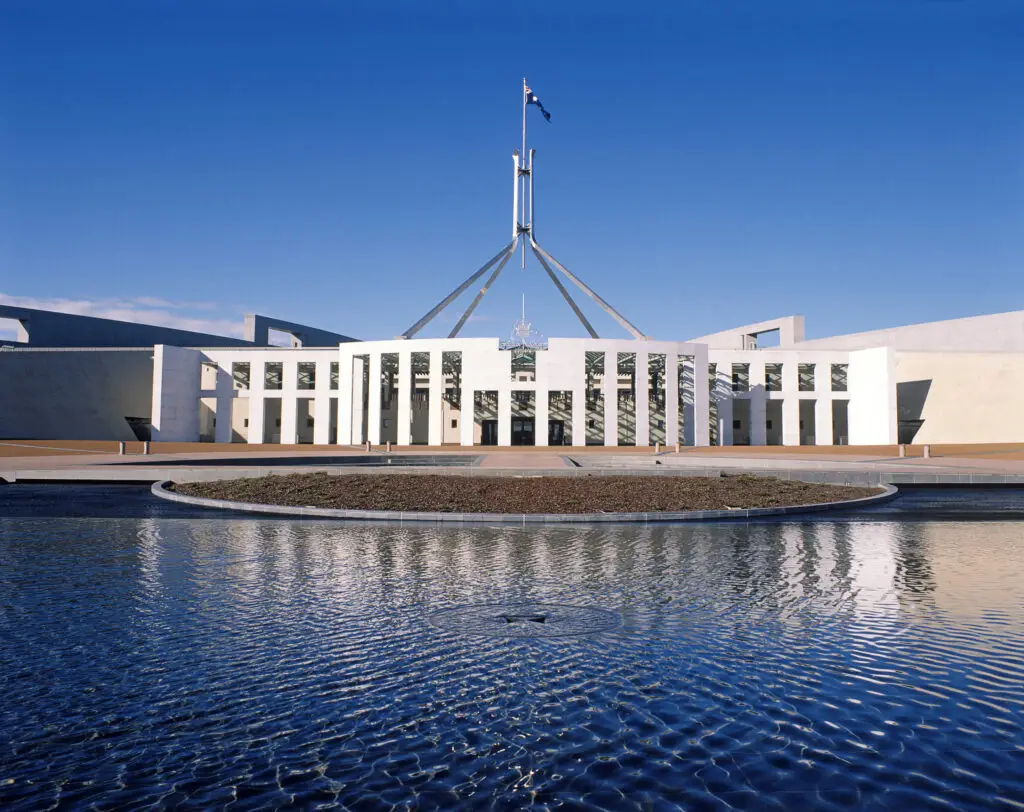
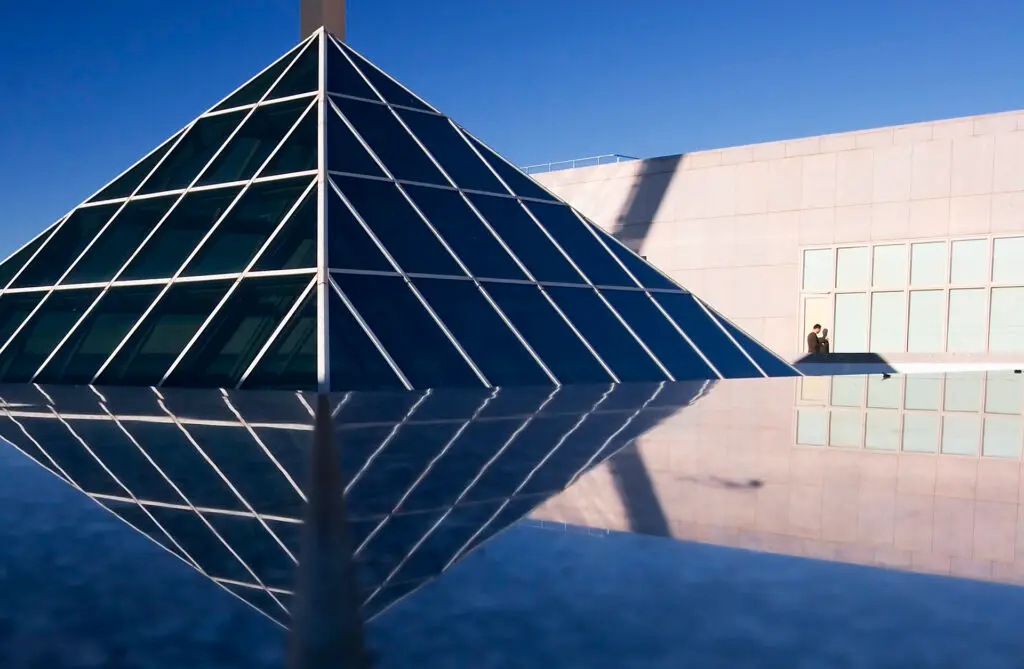
Parliament House is the home of Australia’s Federal Parliament. Guided tours allow visitors to explore the building’s architecture inside and out, while also learning more about Australia’s political history and current parliamentary system. The building also showcases significant artworks and cultural displays.
Telstra Tower
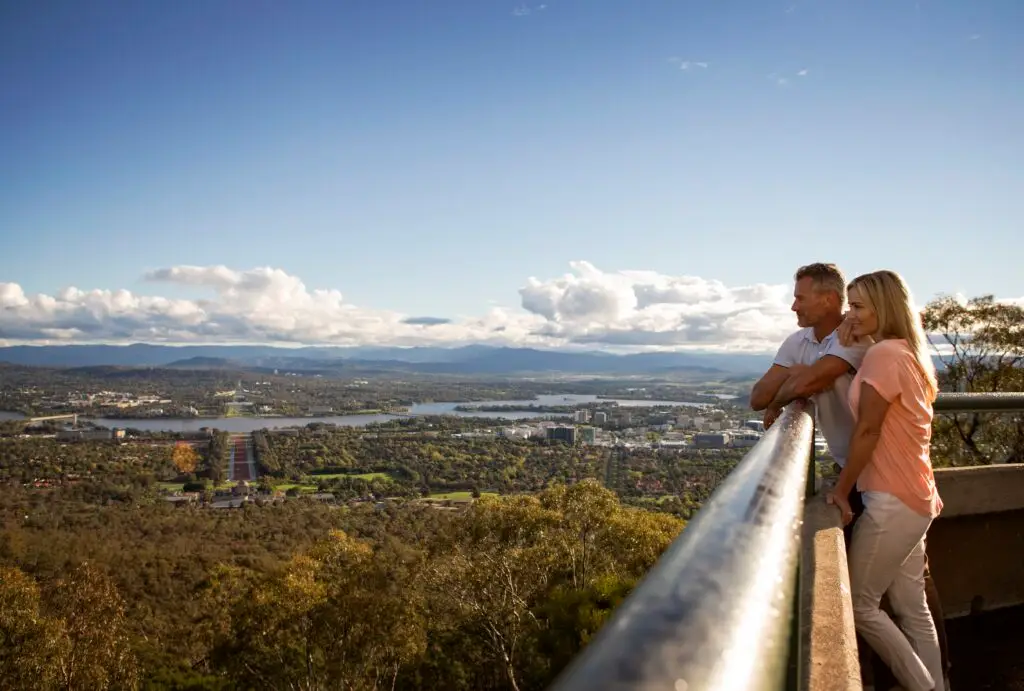
The 132-metre tower offers panoramic 360-degree views across Canberra. While primarily a telecommunications facility, it is also open to visitors and can be explored via tours. A revolving restaurant at the top provides sweeping views over the city and surrounds.
Jindabyne
Jindabyne and the snow-covered alpine region of New South Wales are around a two-hour drive from Canberra. In winter, the area offers skiing and other snow sports, with Canberra serving as a convenient base for alpine trips.
Main Industries
The ACT is largely urban, and job and career opportunities reflect this. Canberra also has the lowest unemployment rate in Australia.
Public service and professional services
As the political and administrative centre of the nation, the ACT is home to many Australian Government institutions, offering a wide range of career opportunities across departments and associated agencies.
Many consulting firms and professional service providers that work with government are also based in Canberra.
Building and Construction
Canberra continues to grow, supported by a large public sector workforce and regular visitors to the capital. With ongoing population growth, demand for new housing and commercial space remains steady, making construction an important economic sector in the ACT.
Science and Education
The ACT hosts leading national science and research bodies, along with supporting organisations involved in research funding and development. Information technology and communications are also important industries and significant employers. Canberra’s universities and research institutions provide diverse employment opportunities, making the capital an attractive location for academics and researchers.
Tourism and Hospitality
Canberra attracts a steady stream of domestic and international visitors, including diplomats as well as leisure travellers. As a result, tourism and hospitality offer a range of employment opportunities across accommodation, events and dining.
Education
Canberra is known for its high education levels and is often considered one of Australia’s intellectual centres. Its universities offer a wide range of study options, and the presence of government staff and diplomatic communities contributes to strong demand for high-quality education. Schools in the ACT are highly regarded and often considered among the best in the country.

Fun Facts about The ACT
- The Canberra area was originally referred to as “Canberry” by European settler Joshua John Moore. The name is linked to the word “Kamberra” used by First Nations peoples, often translated as “meeting place”.
- Canberra’s design was chosen through a competition that received 130 submissions. The winning plan was by Walter Burley Griffin.
- Canberra is often described as Australia’s ‘most educated city’.
- Advertising billboards on the roadside are banned in the ACT, with the exception of bus shelters.
- Each year, more than one million people visit Parliament House, which employs around 5,000 staff.
Top Five Reasons to Live in The ACT
- Traffic: As a carefully planned city, Canberra is known for relatively smooth traffic flow and fewer congestion issues compared with larger capitals.
- Learning: Canberra is home to excellent education institutions and many museums and cultural venues.
- Employment: The ACT combines low unemployment with high average incomes.
- Location: Canberra sits between Sydney and Melbourne and can be a convenient base for weekend trips. The coast (e.g. Batemans Bay) is also around a two-hour drive away.
- Cleanliness: Canberra is known for being a well-maintained and tidy city.
Visa options for the ACT
Although the ACT is a city territory, it is classified as “regional” for skilled migration purposes. This means it may be possible to live and work in the ACT under regional skilled visa options without additional restrictions. General information about Australian skilled migration visas can be found here.
The ACT also offers a structured process for state nomination through the “Canberra Matrix”.
What can the visa pathway look like?
There are different ways to make the dream of living and working in Australia a reality. The key is choosing the strategy that brings you closest to your goal – meaning the visa option that offers the best prospects in your individual situation. Each visa subclass has its own requirements and is linked to specific rights and conditions. The best approach will always depend on your personal circumstances.
That is why it is important to approach your Australian visa pathway in a structured way and clarify the key requirements in advance, in order to avoid problems during the application process. Visapath Australia is happy to help you map out your roadmap to an Australian work visa. We advise you on the different options and support you step by step along the way.
