

With fewer than a quarter of a million residents, the Northern Territory has the smallest population and lowest population density in Australia. Despite – or perhaps because of – this, the region has an incredible amount to offer: breathtaking beaches, dense and untamed bushland, and the unforgiving desert of the Red Centre. The NT is a destination for modern-day adventurers. Experiencing the isolation of such a sparsely populated region leaves a lasting impression.

The NT At a Glance
The NT is home to the hottest capital city in Australia, an unforgiving desert landscape, and some of the country’s least explored regions.
Population
The NT is home to just under a quarter of a million people, around 150,000 of whom live in the capital city, Darwin. Given the vast size of the territory, this makes it the most sparsely populated part of Australia, with just 0.16 people per square kilometre. This is even lower than Greenland, which has an average population density of around 0.2 people per square kilometre.
Main Regions
Below are some of the most well-known regions of the Northern Territory.
Darwin
Darwin is the smallest of Australia’s capital cities and quite literally a hotspot, as it records the highest temperatures of all Australian capitals. It is the main centre of the “Top End”, the northern coastal region of the NT. Darwin is rich in traditional Australian culture and has retained a relaxed, small-town feel.
In addition to the city’s many entertainment options – such as the Mindil Beach Sunset Market or the Deckchair Cinema, an open-air cinema with stunning ocean views – the surrounding national parks also offer a wide range of day-trip opportunities.
Arnhem Land
Arnhem Land is one of Australia’s last true wilderness areas and offers spectacular landscapes and outstanding opportunities for outdoor adventures. It is a must-visit destination for recreational fishers and four-wheel-drive enthusiasts who enjoy advanced off-road tracks. It is also a rare opportunity to explore some of Australia’s most untouched regions.
Katherine
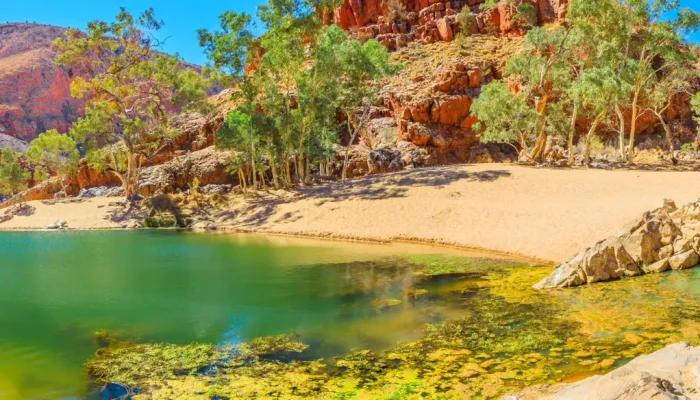
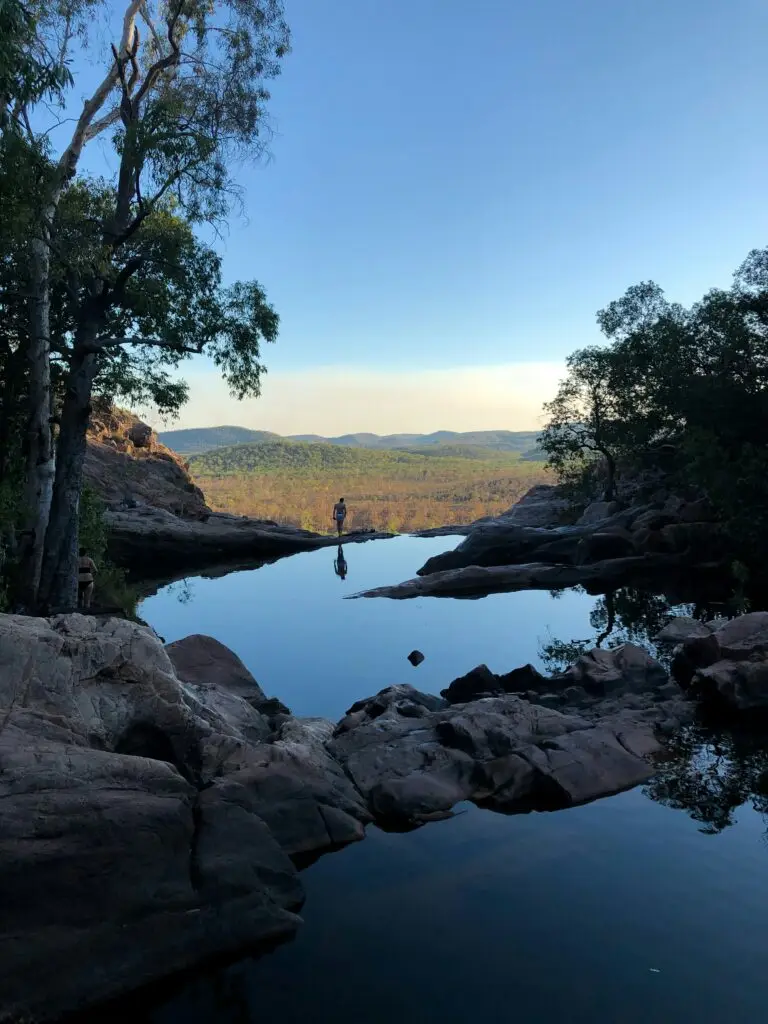
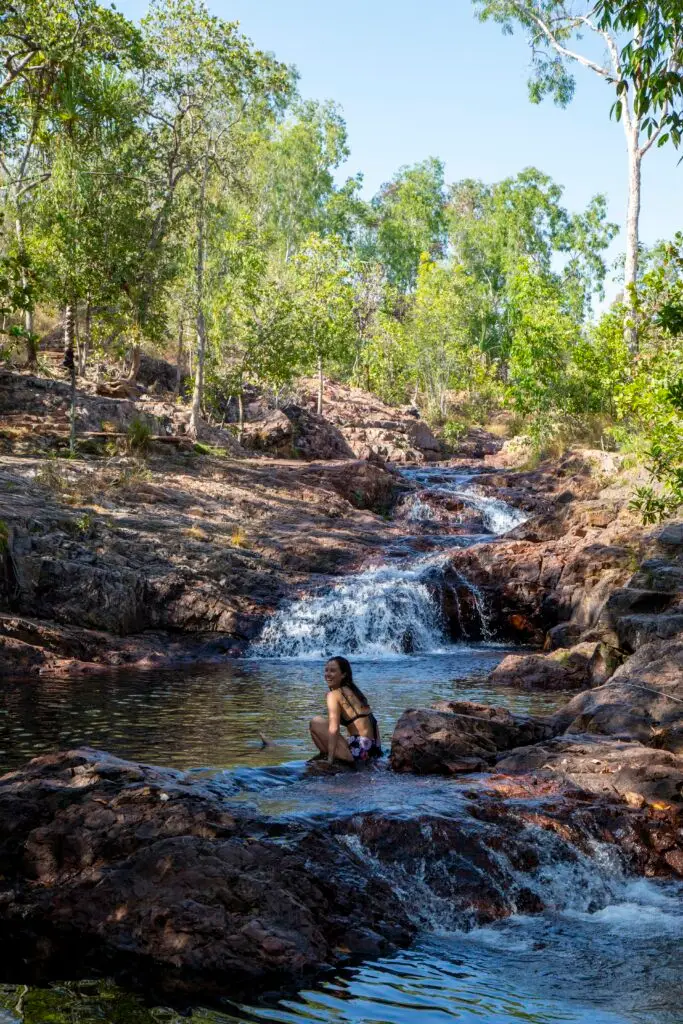
In this rugged part of the Australian wilderness, the desert meets the tropics. The Katherine region is rich in rivers and waterways, including hot springs, hidden swimming spots and beautiful waterfalls. The area is also home to some of Australia’s most unique rock formations.
Barkly Tablelands
This vast grassland region is home to the cattle stations of northern Australia. The properties here are enormous, with some cattle stations covering areas comparable to entire European countries. Massive multi-trailer trucks, known as road trains, are a common sight, transporting cattle across the country.
Alice Springs
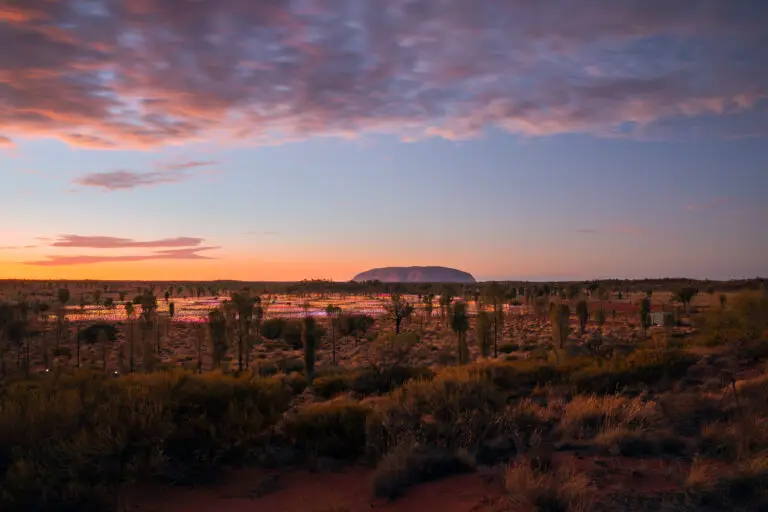
The area surrounding Alice Springs is a harsh desert landscape and forms the heart of Australia’s Red Centre. The crown jewel of the region is Uluru, formerly known as Ayers Rock – a massive sandstone monolith rising 348 metres from the desert floor. Uluru’s striking colour changes make it a highlight at any time of day or year.


Climate
The weather forecast for the NT is almost always the same: hot. The main seasonal difference is whether conditions are hot and dry or hot and wet. The southern part of the territory experiences a desert climate, with some areas receiving virtually no rainfall throughout the year. The northern part of the NT has a tropical monsoon climate, with a distinct wet season between November and April.
Lifestyle
While the Northern Territory may not be as diverse as some other Australian states, it has its own unique appeal. The small population and often vast distances between towns contribute to a quieter, more relaxed lifestyle.
Sports
As in the rest of Australia, sport plays an important role in daily life in the NT, even though relatively few teams compete at a national level. Popular sports include Australian Rules Football, Rugby League, Netball, Hockey and Tennis.
Cuisine
The cuisine of the NT is influenced by its rich waterways and the ingenuity required to live in a harsh outback environment. Barramundi and mud crabs are popular local favourites, as is crocodile meat, which is often available as a more affordable option. Kakadu plum jam is another NT specialty, known across Australia and commonly eaten with damper – a traditional Australian bread often baked over a campfire. Due to the strong Indigenous presence in the territory, there are also opportunities to experience traditional Aboriginal dishes.
Beverages
Paul’s Own Iced Coffee is a popular milk-based drink that originated in the NT and has since become a well-known brand across Australia. Another Northern Territory original is the NT Draught “Darwin Stubby” – a beer bottle with a capacity of 2.27 litres. Originally introduced to reduce handling costs and satisfy the large thirsts of NT residents, the Darwin Stubby is no longer produced but remains firmly embedded in Australian folklore.
Cost of Living
Compared to Sydney, purchasing power in Darwin is significantly higher. Average wages in Darwin are close to Sydney levels, while property prices are considerably more affordable, with homes costing around half as much as in Sydney. Other living costs differ only slightly. Transport, for example, is generally cheaper in Darwin, while dining out tends to be more affordable in Sydney.
Property prices across the NT vary between urban and regional areas. While the average house price in the Greater Darwin area is around AUD 480,000 (approximately EUR 300,000), the average price in Katherine is around AUD 310,000 (approximately EUR 195,000), and in Tennant Creek around AUD 262,500 (approximately EUR 164,000).
Main Places of Interest
The Northern Territory is home to numerous natural and cultural landmarks and is a popular tourism destination due to its unspoilt landscapes.
Kakadu National Park
Kakadu National Park is renowned for its wildlife, waterfalls and rugged terrain. It is Australia’s largest national park and the third largest in the world, offering countless opportunities for nature lovers and outdoor enthusiasts.
Uluru
Uluru, also known as Ayers Rock, is one of Australia’s most iconic landmarks. The monolith appears to change colour throughout the day, and sunset at Uluru is on the bucket list of many travellers. The remote location also makes the region ideal for stargazing.
Crocosaurus Cove
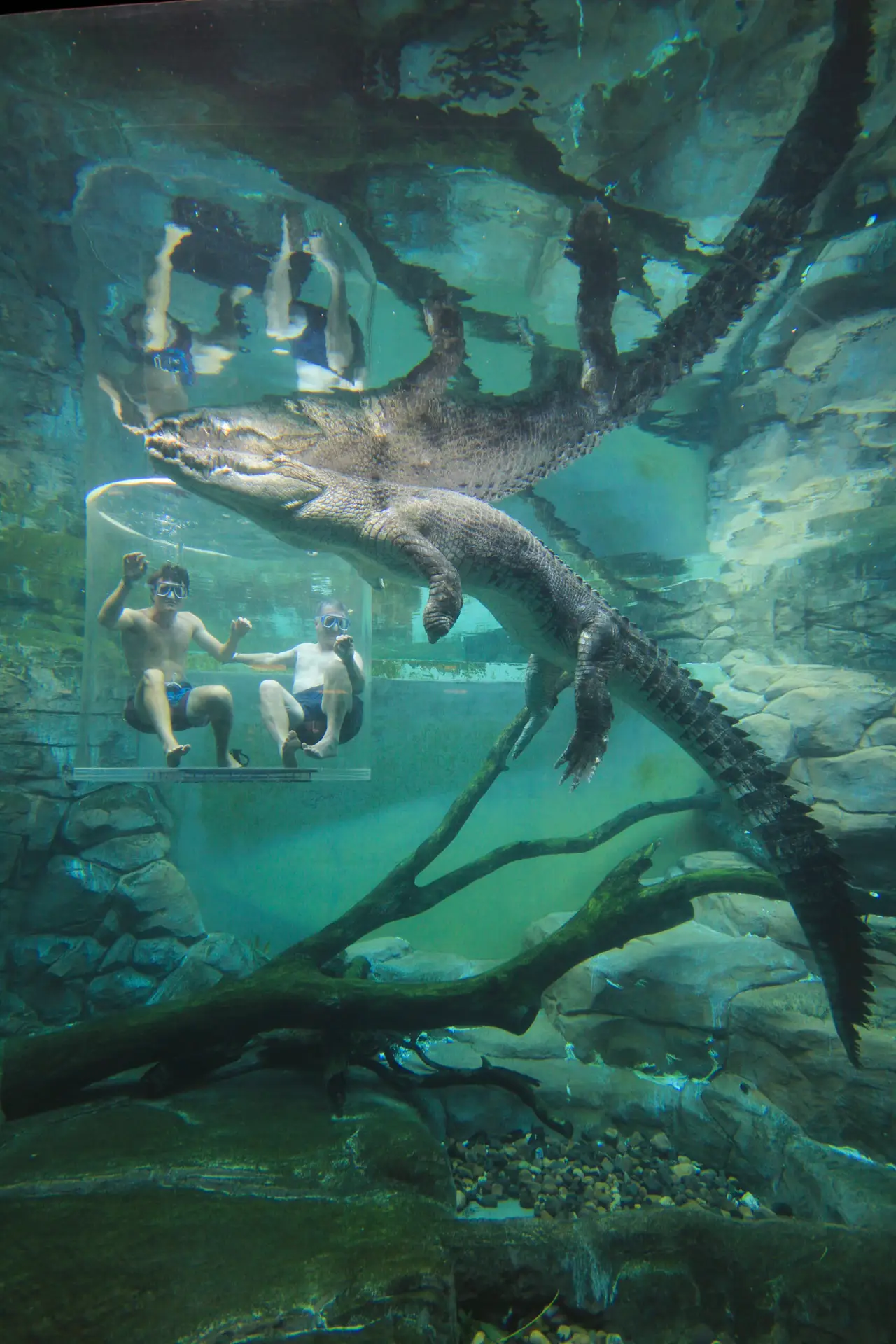
Located in the heart of Darwin, Crocosaurus Cove is home to the world’s largest collection of Australian reptiles. Visitors can learn more about the famous saltwater crocodile or even come face to face with one in the “Cage of Death”.
Barkly Homestead
Situated in one of the most remote parts of Australia, Barkly Homestead is the only roadhouse for hundreds of kilometres in any direction. It serves as a vital stop for travellers as well as a service point for cattle and mining operations in the region.
Main Industries
As most of the population is concentrated in Darwin and large parts of the territory remain undeveloped, the NT’s main industries are focused on specific sectors.
Agriculture and Fisheries
The NT’s climate and geography make it well suited to agriculture and fishing. Inland regions focus primarily on cattle and sheep farming, while coastal areas concentrate on barramundi, crabs and saltwater crocodiles.
Mining
The Northern Territory has benefited from Australia’s resources boom over recent decades. The extraction of natural resources remains a key industry.
Tourism
Tourism and hospitality are important contributors to the NT economy due to the region’s many natural attractions. Darwin and Alice Springs are major hubs for tourism-related businesses.
Education
Darwin is known for having some of the smallest class sizes and favourable teacher-to-student ratios in Australia. Schools also stand out for their cultural diversity and inclusive environment. Charles Darwin University is one of Australia’s most respected universities, with graduates performing strongly in national studies relating to graduate outcomes and employment.
Fun Facts about the Northern Territory
- In 2014, National Geographic listed the Northern Territory among the top 20 places in the world to visit.
- Alice Springs is the town furthest from any beach in Australia – the nearest coastline is around 1,500 kilometres away.
- Uluru rises 348 metres above ground, with most of its mass extending underground for up to 2.5 kilometres.
- Alice Springs hosts annual camel races, famous for the unpredictability of the animals.
- The NT is home to the world’s only land regatta: the annual Henley-on-Todd Regatta, held on a dry riverbed.
Top Five Reasons to Live in the Northern Territory
- Natural, warm, and beautiful. With some of the hottest weather in Australia, the tropical climate will mean never needing to worry about winter.
- Indigenous Culture. If you wish to have an authentic Australian experience with the traditional landholders, the NT offers the best opportunity.
- Darwin is in the wild. Of all the capital cities, Darwin is the closest to literally living in the rainforest, with wild animals on the city roads.
- Education. Class sizes are usually smaller, the educational experience more diverse, and Darwin attracts more scholarships.
- Work Darwin is regularly named as one of the easiest places in Australia to gain employment.
Northern Territory – In Summary
Australia was shaped by people who left home with a spirit of adventure and a willingness to explore the unknown. The Northern Territory still embodies this spirit today. Known as Australia’s last frontier, it offers vast potential for the future and is ideal for those who wish to enjoy the natural beauty of a region largely untouched by civilisation. You can lose yourself in the NT – and perhaps find yourself along the way.
Visa options for the Northern Territory
For skilled migration purposes, the entire Northern Territory – including Darwin – is classified as “regional”. This means you can settle anywhere in the NT on one of the regional visa subclasses, without restriction. You can find general information on Australian skilled visas here.
The NT also has a DAMA (Designated Area Migration Agreement) that covers the entire territory. This opens a pathway to a work visa for prospective migrants in occupations that do not otherwise appear on the national skills lists – for example truck drivers or tour guides. You can find more information on the DAMA in our blog article.
What can the visa pathway look like?
There are different ways to make the dream of living and working in Australia a reality. The key is choosing the strategy that brings you closest to your goal – in other words, the visa option that offers the best prospects in your individual situation. Each visa subclass has its own requirements and is linked to specific rights and conditions. The best approach will always depend on your personal circumstances.
That is why it is important to approach your Australian visa pathway in a structured way and clarify the key requirements in advance, in order to avoid problems during the application process. Visapath Australia is happy to help you map out your roadmap to an Australian work visa. We advise you on the different options and support you step by step along the way.
