
Home » Client Stories » Katharina and Chris
Chris & Katharina – From Agricultural Mechanic in Germany to Permanent Resident in Australia
Visapath client story · Bavaria → Victoria

A Thought That Wouldn’t Go Away
When Chris and Katharina were living in Günzburg, Germany, with their three children, daily life was well organised: work, school, kindergarten, routines. And yet, over time, one thought kept returning — Australia.
It wasn’t a spontaneous idea, nor a desire to escape. Instead, they began asking themselves what life could look like if, as a family, they chose a different path. Not out of dissatisfaction, but out of a wish to explore possibilities while they were still realistic.
With three children, this kind of decision isn’t just a thought experiment. It requires structure, security and, above all, a long-term perspective. That’s why Chris and Katharina decided early on to seek professional advice.
Their first consultation with Visapath took place in February 2022. The goal was clear: to find out whether Australia was a realistic option for them as a family — and if so, which pathway would make sense.
From working in Germany to a Future in Victoria
Chris trained as an agricultural mechanic and worked as a service technician for an agricultural engineering company in Germany. From the outset, he knew one thing: moving to Australia would only make sense for him and his family if it also offered a clear professional future.
While still in Germany, he began researching Australian companies in his field and proactively reached out. He had initial conversations, built contacts within the agricultural sector — at first informally, until things suddenly moved very quickly.
“I think it wasn’t even two weeks later that my current employer contacted me and said: Chris, we’ve heard you might be considering a move to Australia.”
Those early conversations soon turned into something concrete.
“They were the first ones who made me an offer and sent through an employment contract.”
As discussions progressed, the focus shifted beyond the role itself to the longer-term outlook. Initially, a temporary work visa was considered. For Chris, however, it was important to plan as sustainably as possible given the move with his family.
Based on his qualifications, professional experience and the company’s specific needs, the conversation evolved further. Eventually, the employer agreed to sponsor him directly for Australian Permanent Residency through the Employer Nomination Scheme — laying the foundation for a long-term future in Australia, both professionally and personally.
When the Path Takes Shape
With a committed employer, a defined role and a clear long-term plan, the process gained momentum.
With Visapath’s support, Chris commenced his Skills Assessment as a Fitter with Trades Recognition Australia (TRA) in April 2022. The positive outcome followed just one month later.
The next step was the English test. Chris prepared deliberately, aware that this was another important component of the process.
“It’s just part of the process. You prepare properly and stay focused — then it’s manageable.”
At the same time, formal preparations for the visa application continued. In June 2022, his employer initiated the next steps under the Employer Nomination Scheme (Subclass 186, Direct Entry).
What followed was mainly one thing: waiting. While everything was organised, much of the outcome was now beyond their control. Patience became the biggest challenge of this phase.
Then, in November 2022, the long-awaited message arrived: the visa had been granted.
“So much pressure just fell away,” Chris recalls.

At a glance
Timeline
2022 → 2023
Location
Yarragon, VIC
Status
Permanent Residents through Employer Nomination Scheme Visa
Moving overseas with Three Children
In February 2023, the family relocated from Günzburg in the south of Germany to Gippsland, Victoria. It was a carefully planned step — and still a demanding one.
With three children, the move was far more than a change of address. Schooling, daily routines and social connections all had to be rebuilt. Many things worked differently than in Germany, and some adjustments took time.
At the same time, the family was surprised by how adaptable children can be. The kids settled in relatively quickly, especially at school. Life in regional Australia also brought new freedoms.
Their youngest son, just two years old at the time, adjusted quickly and now grows up with English as his everyday language. The two older children, aged seven and nine, started school shortly after arrival. In hindsight, this had been one of the family’s biggest concerns — and ultimately one of their greatest reliefs.
“We were quite nervous about how school would work out,” Katharina says. “But it worked surprisingly well.”
Early academic assessments confirmed that the children weren’t just coping but thriving. Both performed very well, and their daughter was even able to skip a grade after some time. For Chris and Katharina, this was above all a reassurance.
Australia quickly became tangible for the children — with space, nature and a daily life that felt different, yet soon became their new normal.
Living and Working in Regional Australia
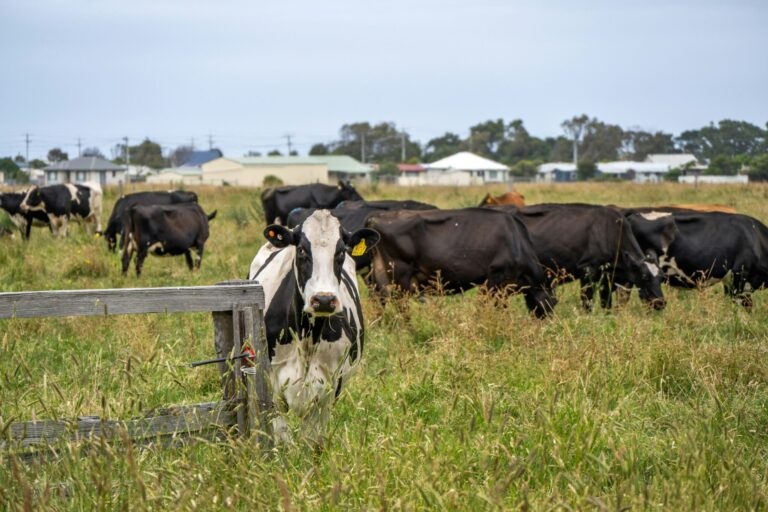
Chris began work shortly after arriving. In the first months, language was the biggest challenge. Direct customer interaction required focus — not so much due to technical vocabulary, but because of Australian accents.
“At the beginning, it was definitely hard to understand the customers,” he recalls. Over time, this eased. Today, he describes his relationships with clients as positive and personal. “It just works well.”
The pace of work was another adjustment. Compared to Germany, things feel noticeably more relaxed.
“Some days I’m home by 4:30 in the afternoon thinking: Now what?” Chris laughs. The days feel less tightly scheduled, leaving more space between work and evening.
Rather than letting that time go unused, Chris began building something of his own alongside his job. He bought a tractor and some machinery equipment, and the family moved into a house with adjoining land. Keeping animals soon became part of daily life — chickens and Wagyu cattle included.
“I’ve got time, I’ve got space,” Chris says. It’s not a large-scale venture, but something that grows gradually and fits naturally with life in rural Australia.
One of the biggest differences he notices is the workplace culture. He experiences the environment as far more appreciative, particularly when it comes to effort and motivation. This became tangible when he received a significant pay rise after just a few months.
“That didn’t come because I asked for it — it just happened,” he explains. For him, it was a clear sign that his work was recognised.
Katharina experiences daily life in regional Australia as calmer, but also less structured. Many things don’t happen automatically. Social connections, routines and structures need to be actively built — at work and in private life. After many years rooted in one place in Germany, this took some adjustment.
Family Across Generations
By now, everyday life has settled. Step by step, a life has emerged that feels sustainable — for every member of the family. Above all, the children feel at home. For Chris and Katharina themselves, it’s more of a gradual process of putting down roots.
Their move has also inspired others. Chris’ parents are now exploring their own pathway to Australia through a Parent Visa, with the aim of spending more time together as a family.
Not an Easy Path — But the Right One
Supported Every Step of the Way
Chris and Katharina are open about the challenges of their journey. Organisation, responsibility and emotional adjustment were all part of the process — especially with three children.
Many things had to be figured out from scratch: dealing with authorities, navigating everyday life, understanding new systems. And yet, both are certain they would make the same decision again.
Not because everything is perfect — but because life now feels aligned.
For them, living in Australia means more freedom and the feeling that they are giving their children something that goes beyond school and grades.
Both describe the guidance from Visapath as a key stabilising factor. As a family, having clarity around processes, timelines and realistic expectations was crucial. It also helped them enter employer discussions with a clear understanding of visa options and requirements.
The professional structure reduced pressure and allowed them to focus on the move itself, their children and building a new everyday life.
Looking Ahead
Today, Chris and Katharina live permanently in Australia with their three children. Daily life feels settled, much has become second nature. At the same time, they remain open to what the future may bring — including the possibility of moving to another region of Australia one day.
Australia is no longer an adventure. It has become home.
“The path wasn’t easy,” Chris says. “But it brought us exactly to where we are now.”
Interview With Chris and Katharina
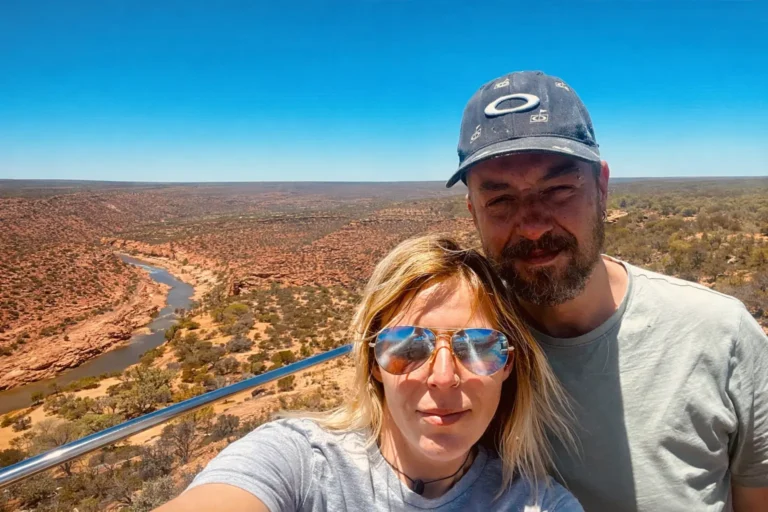
What did you find most challenging about the visa process?
Chris: “The waiting. At some point, everything is submitted and you just have to wait. That’s mentally challenging, especially when you’re making plans as a family and so much depends on the outcome.”
What did Permanent Residency mean to you personally?
Katharina: “Above all, it meant security. Knowing that we’re allowed to stay and don’t constantly have to think about what comes next visa-wise. That took a huge amount of pressure off — especially with children.”
What do you miss about Germany?
Chris: “Honestly — the food. Especially good bread and things you’d get from a butcher. Leberkäse, cold cuts — those everyday things. You don’t think about them much until they’re suddenly not there anymore.”
Chris, what do you value most about working in Australia?
Chris: “I feel much more strongly here that effort actually pays off. If you’re willing to work hard and get involved, you can really achieve something. For me, that’s a big difference compared to Germany. It’s less about formalities or how long you’ve been somewhere, and more about what you can do and how you work.”
How did your children experience the move to Australia?
Katharina: “The kids settled in surprisingly easily. They found their place quite quickly, especially at school.”
Chris: “There’s just so much more space here. We recently bought a second-hand quad bike for our eldest — he can just ride around outside. That freedom makes a big difference for the kids. Australia feels very open to them.”
What was the biggest adjustment for you as a family after moving?
Katharina: “Definitely the organisational and emotional reset. In Germany, everything was familiar — school, routines, social networks. Here, you have to rebuild a lot of that. With three children, that’s intense. But we also noticed that as a family, you grow closer and find solutions together. That strengthened us.”

Katharina's and Chris's VISA PATH

Schritt 2

Employer Nomination Scheme
(subclass 186)




Ready to begin your own chapter?
From your first questions through to the final visa grant — we support you at every step of your journey to Australia.